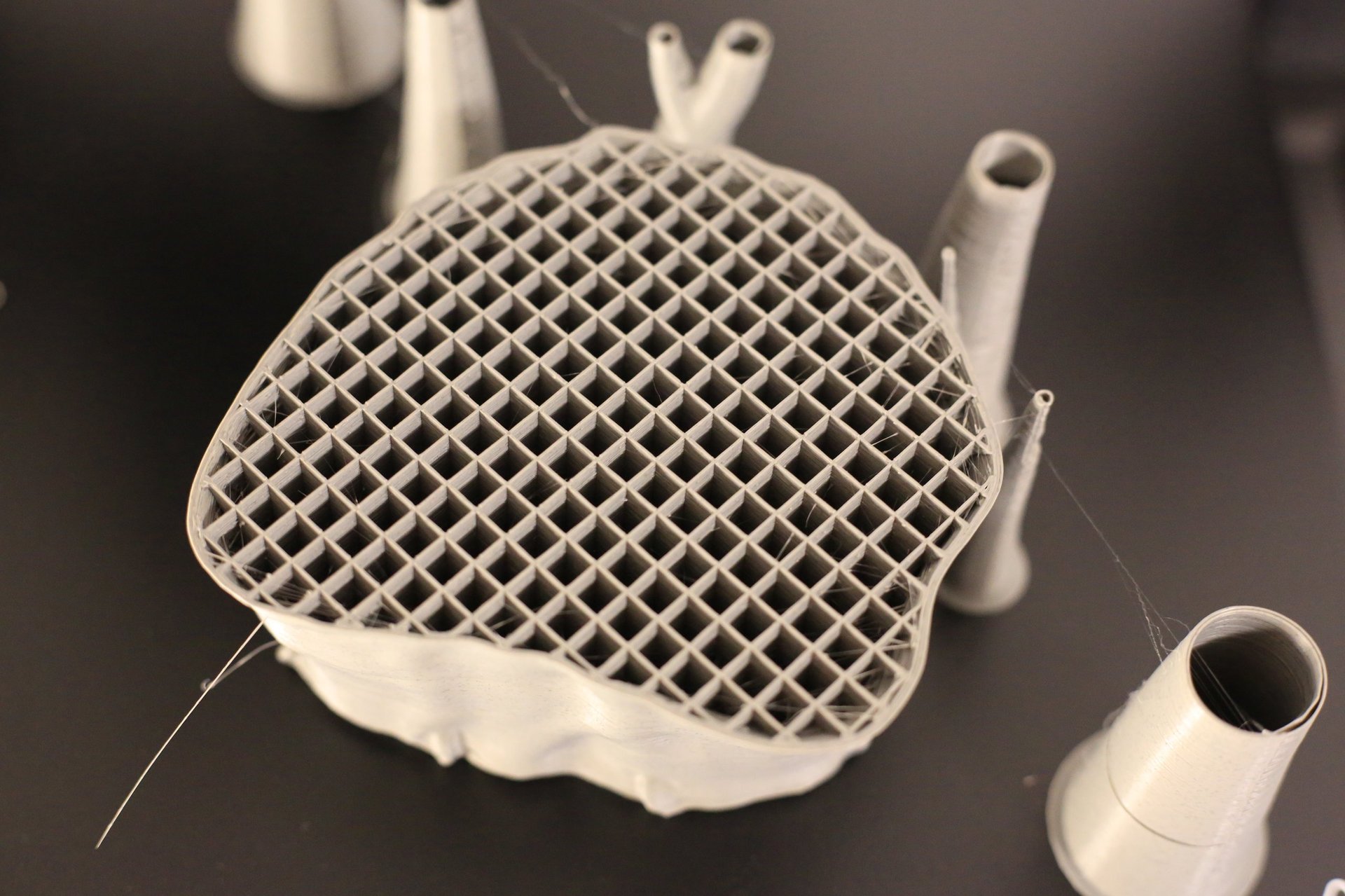
FDM thermoplastics, SLS nylon, and SLA photopolymer resins — all available in-house at our Minneapolis and Denver facilities. We match the right material to your application, not the other way around.
FDM builds parts by extruding molten thermoplastic layer by layer. It's the most versatile technology — offering the widest range of engineering-grade materials for functional parts.
The most common FDM material. Easy to print, biodegradable, good surface quality. Ideal for concept models, prototypes, and non-functional display parts.
The classic engineering plastic. Strong, heat-resistant, and machinable. Widely used in injection molding — making it ideal for functional prototypes that mimic production parts.
The best of both worlds — strength of ABS with ease of PLA. Excellent layer adhesion, food-safe options, and good chemical resistance. Great for functional parts and containers.
A true engineering thermoplastic. Exceptional toughness, wear resistance, and fatigue tolerance. Used in aerospace, automotive, and industrial applications requiring long-term durability.
Flexible, rubber-like material with excellent abrasion resistance. Shore A hardness ranging from 85A to 95A. Ideal for seals, gaskets, protective covers, and wearable device components.
Nylon reinforced with chopped carbon fiber strands. Stiff, strong, and lightweight — with thermal and mechanical properties far exceeding standard nylon. Ideal for lightweight structural parts.
SLS sinters nylon powder with a laser, building fully functional parts without support structures. Ideal for complex geometries, fine features, and durable production-grade parts.
The workhorse SLS material. Excellent mechanical properties, good chemical resistance, and outstanding elongation at break. Suitable for functional prototypes and end-use production parts alike.
Nylon 12 reinforced with glass spheres. Higher stiffness and better dimensional stability than standard Nylon 12, with excellent surface quality. Slightly more brittle but much more rigid — ideal for functional testing.
Nylon reinforced with aluminum powder — giving parts a subtle metallic sheen and significantly improved stiffness. The aluminum content also improves thermal conductivity, making it better for high-temperature applications.
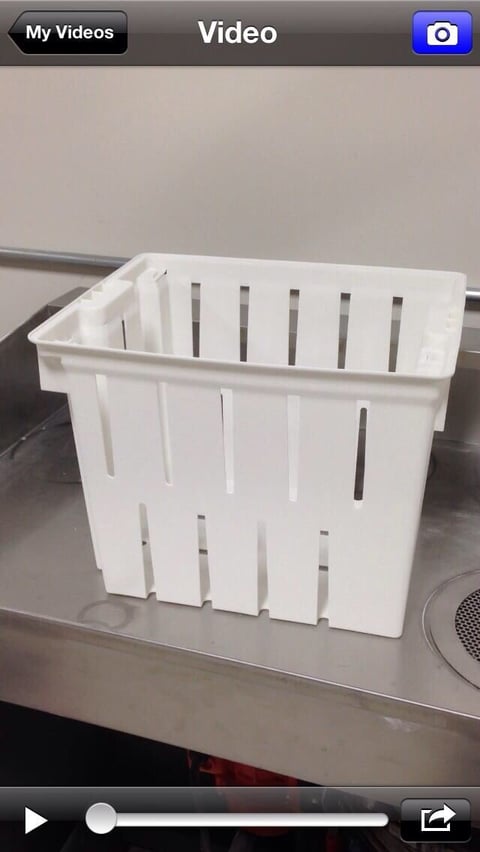
SLS-produced cases and enclosures for agricultural product handling operations. The white finish achieved through SLS is clean, durable, and ready for post-processing or direct use in food-grade environments.
Unsintered powder self-supports — enabling complex internal geometries.
Parts are equally strong in all directions — no weak layer lines.
Fine features, thin walls, and complex lattices — all achievable.
Unused powder is reclaimed and reused — making SLS highly efficient.
SLA uses a laser to cure liquid photopolymer resin layer by layer — producing the highest resolution and smoothest surface finish of any 3D printing technology. Ideal for visual prototypes, dental models, and precision components.
The most common SLA material. High detail, smooth surface finish, and excellent resolution. Ideal for visual prototypes, concept models, and display parts with fine features.
Engineered to simulate ABS plastic — with high impact resistance, good elongation, and reliable performance under stress. The best choice for functional prototypes that need to survive real-world testing.
A soft, rubber-like material with Shore A hardness of 80A–90A. Ideal for prototyping soft-touch overmolds, gaskets, seals, and wearable device components that need flexibility and tactile feedback.
Designed to burn out cleanly with zero ash residue in investment casting. Produces flawless, smooth patterns for jewelry, dental crowns, and precision metal castings. Clean burnout, sharp detail.
A range of FDA-cleared, biocompatible resins for dental and medical applications. Includes surgical guide resin, model resin, gingival mask, and pattern resin for direct and indirect restorations.
Engineered for applications requiring high thermal resistance. HDT of 260°C (0.45 MPa) — among the highest of any photopolymer. Ideal for molding patterns, aerospace components, and high-heat environments.
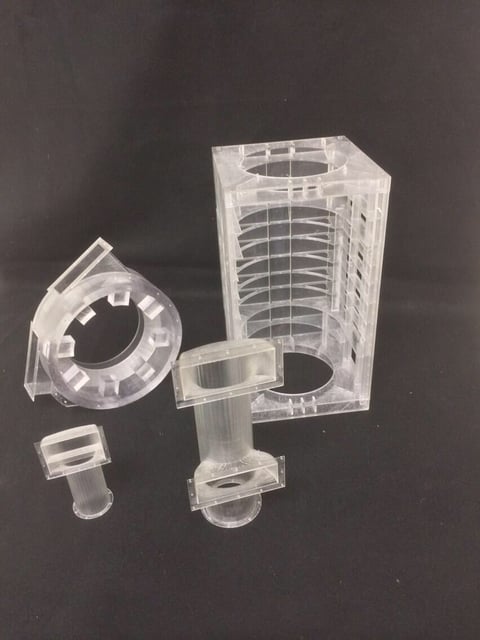
SLA excels at producing transparent parts like filter housings and cylindrical components. The clear finish achieved with standard or transparent SLA resin is ideal for fluid visualization and optical clarity applications.
Material selection depends on your application — strength requirements, temperature exposure, surface finish needs, and budget. Here's a quick guide to help you choose, or just ask us — we give free material recommendations.
Nylon 12 (SLS) or Carbon Fiber Nylon (FDM) — both offer excellent tensile strength, fatigue resistance, and long-term durability in demanding environments.
Or: Tough Resin (SLA) for high-impact functional prototypes. Glass-Filled Nylon for maximum stiffness.
Standard Resin (SLA) produces the smoothest, most injection-molded-like surface of any 3D printing technology. Perfect for visual prototypes, consumer products, and presentation models.
Note: SLA parts may require post-processing (sanding, priming) to achieve a truly class-A surface.
Nylon 12 (SLS) — no support structures means you can print internal channels, complex lattices, and intricate features that FDM simply can't achieve. Standard Resin (SLA) for the finest details.
Tip: Unsintered SLS powder self-supports, enabling truly complex part geometries.
PLA (FDM) is the most cost-effective material and easy to print. For slightly more, ABS offers better mechanical properties. SLA tends to be higher cost due to resin and post-processing requirements.
Note: We offer volume pricing — larger quantities significantly reduce per-part material cost.
| Property | FDM | SLS | SLA |
|---|---|---|---|
| Best Surface Finish | Layer lines visible | Slightly grainy | Smoothest finish ✓ |
| Strength (Tensile) | High ✓ | Very High ✓ | Moderate–High |
| Heat Resistance | ABS: 95°C | Nylon: 175°C ✓ | High-temp: 260°C |
| Chemical Resistance | ABS: Good | Nylon: Excellent ✓ | Varies by resin |
| Flexibility | TPU available | Rigid | Flexible resin available ✓ |
| Biocompatible Options | Limited | Limited | Dental/Medical resins ✓ |
| Cost per Part | $$ — Economical | $$$ — Premium | $$$ — Premium |
Still unsure? Upload your design and tell us your requirements — our engineers will recommend the best material for your application, free of charge.
Get a Free Material RecommendationFDM, SLS & SLA — the full range of 3D printing technologies.
Need a part digitized? We can scan it and deliver production-ready files.
Print part numbers, lot codes, and branding directly on your printed parts.
All materials printed in-house at Minneapolis & Denver — no outsourcing.
Upload your design files and tell us about your application. Our engineers will recommend the optimal material and technology — then get you a fast, honest quote.